Keychain 3D Mockup: A Practical Tool for Accessory Branding and Merchandise Presentation
Designing and presenting keychain merchandise has evolved beyond physical prototypes and basic flat images. The Keychain 3D Mockup offers a modern, efficient solution for brands, designers, and retailers looking to showcase customizable accessories in a visually engaging and professional format. This digital tool enables users to create lifelike representations of keychains without the need for photo shoots or physical samples, streamlining the design and marketing process.
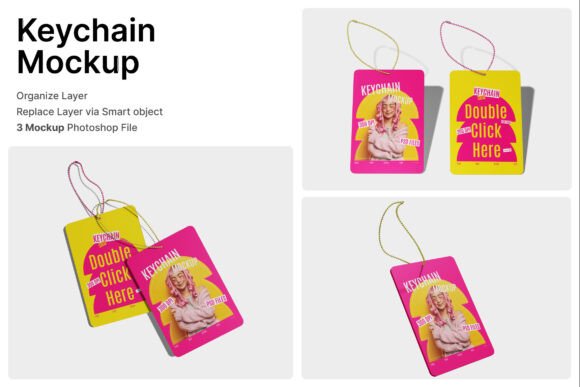
At its core, the Keychain 3D Mockup is a digital template that allows for the seamless integration of custom graphics onto a three-dimensional model of a keychain. It typically includes multiple viewing angles—front, back, side, and hanging perspectives—giving users a comprehensive visual of how their design will appear in a real-world context. The mockup is often delivered as a set of Photoshop PSD files, making it compatible with widely used design software and easy to customize through smart object layers.
What Makes the Keychain 3D Mockup Stand Out?
Unlike generic product mockups, the Keychain 3D Mockup is specifically tailored for small, wearable accessories. It provides a realistic sense of scale, texture, and presentation that aligns with how consumers interact with these items. Whether used for fashion accessories, promotional giveaways, or personalized gifts, this mockup format helps visualize the final product in a way that resonates with both creators and customers.
One of its defining features is the inclusion of smart object layers, which simplify the customization process. Users can double-click a layer, insert their design, save, and immediately see the updated mockup without altering the original file structure. This functionality saves time and allows for rapid iterations, especially useful during the design approval phase or when presenting multiple options to stakeholders.
The mockup also includes multiple display arrangements—such as hanging views, tag-style layouts, and portable product perspectives—making it versatile for different branding contexts. These variations help designers simulate how the keychain will look in retail settings, online product listings, or packaging displays.
Comparing the Keychain 3D Mockup with Alternatives
While there are various tools for product visualization, the Keychain 3D Mockup distinguishes itself through its focus on small-scale accessories. Compared to general-purpose 3D modeling software, which can be complex and time-consuming, this mockup offers a more accessible and streamlined approach. Designers who are already familiar with Adobe Photoshop can begin using it immediately without a steep learning curve.
Photorealistic renderings generated through 3D modeling suites may offer more detailed environmental settings, but they often require advanced skills and significant processing power. In contrast, the Keychain 3D Mockup balances realism with usability, making it ideal for smaller businesses, freelancers, and in-house marketing teams that need to produce high-quality visuals quickly and cost-effectively.
Another alternative is using stock photography with editable layers, where users can place their designs over real images of keychains. While this method can yield realistic results, it lacks the flexibility of a fully layered 3D mockup. With the Keychain 3D Mockup, users can adjust lighting, perspective, and background elements more easily, ensuring consistency across branding materials.
Strengths and Limitations of the Keychain 3D Mockup
One of the primary strengths of this mockup format is its efficiency. It eliminates the need to produce physical samples for every design iteration, which is especially valuable when working with remote clients or international teams. Additionally, it supports a wide range of applications, from e-commerce product previews to print-ready visuals for packaging and promotional materials.
The high-resolution output—typically 4000 x 3000 pixels at 300 dpi—ensures that the visuals are suitable for both digital and print use. This resolution maintains clarity even when scaled for larger formats like posters or banners, making the Keychain 3D Mockup a versatile asset in a designer’s toolkit.
However, there are limitations to consider. Since the mockup does not include embedded image stock, users must supply their own background or contextual images if they want to enhance the presentation. This can add an extra layer of effort, especially for those who are not experienced in photo editing or composition.
Additionally, while the mockup offers a high degree of realism, it cannot fully replicate the tactile qualities of a physical product. For example, materials like rubber, metal, or fabric may not be accurately represented in the digital preview. In such cases, a physical prototype or a more advanced 3D rendering tool may be necessary for a complete evaluation.
When to Choose the Keychain 3D Mockup
The Keychain 3D Mockup is particularly well-suited for situations where speed, cost-efficiency, and visual accuracy are priorities. It’s an excellent choice for:
- Designers creating product visuals for online stores or marketplaces
- Brands developing promotional keychains for events or campaigns
- Merchandise creators presenting design options to clients or production teams
- Small businesses looking to launch new accessory lines without the expense of professional photography
If the goal is to generate clean, consistent visuals that convey the look and feel of a keychain design without the need for physical samples, this mockup format is a strong contender. It’s especially useful during the early stages of product development or when multiple design variations need to be reviewed quickly.
When Another Option May Be Better
Despite its many advantages, there are scenarios where the Keychain 3D Mockup may not be the best fit. For example, if the design involves highly intricate textures or requires precise material simulation—such as metallic finishes or embossed elements—more advanced 3D rendering tools might be necessary to capture those details accurately.
Similarly, if the intended use includes immersive digital experiences like augmented reality (AR) or interactive 360-degree views, a dedicated 3D modeling platform would offer more flexibility and interactivity. These platforms allow for dynamic manipulation of the product view, which is beyond the scope of standard mockup files.
For projects requiring a broader visual context—such as placing the keychain within a lifestyle scene or a retail environment—using a combination of mockup templates and photo compositing techniques may yield more engaging results. However, this approach typically requires more time and technical expertise.
Practical Use Cases and Real-World Examples
Consider a boutique fashion brand launching a new line of branded keychains as part of a seasonal collection. Using the Keychain 3D Mockup, the design team can quickly generate visuals that reflect different color schemes, patterns, and logo placements. These visuals can be used on the brand’s website, social media, and packaging materials, ensuring a cohesive look across all touchpoints.
In another scenario, a promotional products distributor might use the mockup to create digital samples for clients ordering custom keychains. Instead of sending physical samples, they can generate mockups that show exactly how the client’s logo or artwork will appear on the finished product. This speeds up the approval process and reduces logistical overhead.
For independent creators selling on platforms like Etsy or Shopify, the Keychain 3D Mockup offers a cost-effective way to present their products professionally. Without investing in a photo shoot or hiring a 3D artist, they can generate high-quality visuals that help convert browsers into buyers.
Final Thoughts on Choosing the Right Visualization Tool
When evaluating visualization tools for accessory design, the Keychain 3D Mockup strikes a balance between realism, usability, and affordability. It’s not a one-size-fits-all solution, but for many design and marketing scenarios, it offers a practical and efficient way to bring ideas to life. Understanding its strengths and limitations allows users to make informed decisions about when and how to incorporate it into their workflow.
Whether you're a designer looking to streamline your presentation process, a brand manager preparing for a product launch, or an entrepreneur exploring merchandising options, the Keychain 3D Mockup is a valuable asset that can help you communicate your vision clearly and professionally.